Our Future
-
The next four years will help shape West Vancouver for decades to come.
Our responsibility is not simply to manage today's challenges, but to leave an even stronger community for those who follow us.
I envision a West Vancouver that remains true to the qualities that make it extraordinary—a community where thoughtful planning respects our natural environment, strengthens our neighbourhoods, supports vibrant local businesses, and creates welcoming public spaces for people of all ages.
That vision includes:
Planning for West Vancouver's unique circumstances. Our geography, transportation network, infrastructure and natural environment require solutions tailored to our community—not one-size-fits-all policies.
Continuing to develop diverse housing options for families and our aging demographic.
Protecting neighbourhood character while planning responsibly for the future. We can provide thoughtfully planned housing choices while respecting the qualities that make our neighbourhoods distinctive.
Developing a thoughtful Marine Drive/Taylor Way Local Area Plan that improves mobility, creates a welcoming gateway to West Vancouver, and reflects the identity and needs of our community.
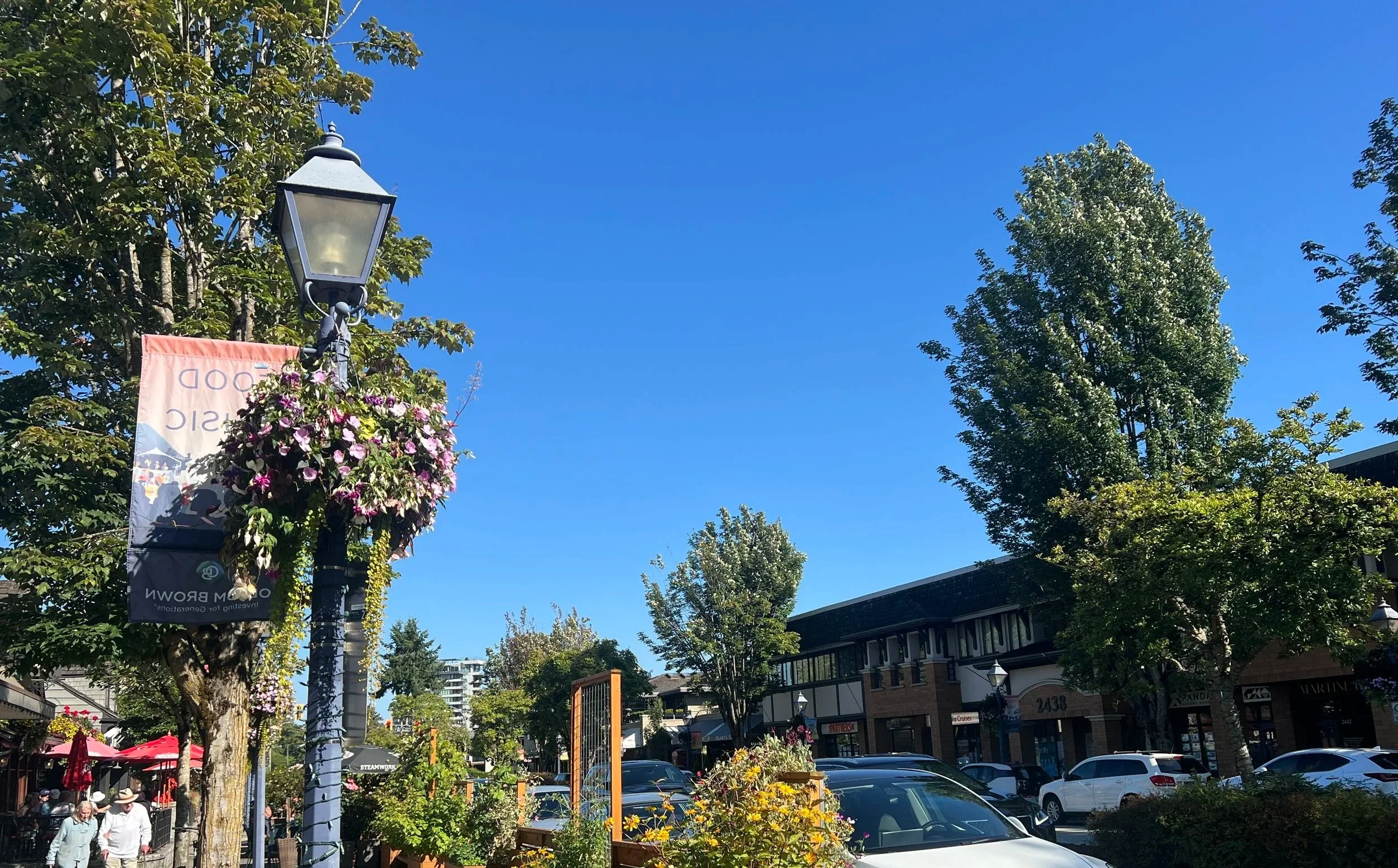
Strengthening our commercial villages. Ambleside, Dundarave, Horseshoe Bay and our other neighbourhood centres are essential to a strong community. Thoughtful revitalization can support local businesses, encourage investment, improve the public realm, and create places where residents and visitors want to gather.
Protecting our natural environment. Our tree canopy, parks, trails, beaches and waterfront are fundamental to the quality of life that makes West Vancouver special. They deserve thoughtful stewardship for generations to come.
Creating welcoming, connected public spaces. From our waterfront and village centres to our parks and neighbourhoods, public spaces should bring people together and strengthen the connections between the places we live, work and gather.
West Vancouver's future should never be defined by becoming more like somewhere else.
It should be defined by becoming the very best version of itself.
-
The experience of living in West Vancouver begins the moment we step outside our front door.
It's the condition of our roads and sidewalks. The cleanliness of our parks and public spaces. The health of our trees and boulevards. The quality of our trails, beaches and waterfront. These are the places residents experience every day, and they shape how we feel about the community we call home.
As our community evolves, we must continue investing in the infrastructure and public spaces that support our quality of life. Roads, sidewalks, parks, trails, stormwater systems, public facilities and our urban forest all require thoughtful planning, ongoing maintenance and responsible stewardship.
Building a great community isn't always about major projects. It's also about taking pride in the details—well-maintained neighbourhoods, welcoming public spaces, vibrant village centres and infrastructure that serves residents today while preparing for tomorrow.
Great communities aren't built all at once. They're built every day through thoughtful planning, careful investment and pride in the places we share.
-
West Vancouver has earned a reputation for delivering exceptional municipal services. Those services come at a cost, however, and as expectations evolve and costs continue to rise, we have an obligation to continually improve how they are delivered while ensuring taxpayers receive good value for every tax dollar.
As Council's liaison and a voting member of the Finance and Revenue Advisory Committee, I work closely with a volunteer group of highly experienced financial professionals to examine the District's long-term financial health and sustainability. That work reinforces the importance of regularly reviewing our operations, identifying efficiencies, and ensuring District resources are directed where they deliver the greatest benefit.
I support the work already underway to streamline operations, modernize processes, reduce unnecessary duplication, and make thoughtful use of technology, including the ongoing implementation of recommendations from the Innova Service Delivery Review.
Good stewardship means never assuming today's way of doing things is the best way. Continuous improvement should be an ongoing commitment—not a one-time exercise.
Our goal should always be to deliver exceptional municipal services as efficiently and responsibly as possible, while protecting West Vancouver's long-term financial sustainability.
My Priorities
-
Recognizing the importance of prudent financial stewardship, Council established the Finance and Revenue Advisory Committee in 2025 to bring together experienced financial professionals from our community to provide independent advice and recommendations on long-term financial planning, budgeting, and revenue opportunities.
As Council's liaison and a voting member of the committee, I have the privilege of working alongside some of West Vancouver's most accomplished financial minds. The committee provides Council with an additional level of financial expertise and independent perspective as we consider complex financial decisions that will affect our community for decades to come.
Serving on the committee has reinforced one of the questions I ask before every major decision: What are the long-term financial implications? Every decision we make affects future budgets, future taxpayers, and future Councils. Responsible stewardship means looking beyond today's priorities to ensure West Vancouver remains financially strong for generations to come.
Additional School Tax
West Vancouver homeowners collectively pay one of the highest amounts of the Additional School Tax in British Columbia, yet many residents understandably believe those dollars remain in our community. They do not. The tax flows into the Province's General Revenue rather than directly supporting the West Vancouver School District.
Through the Union of BC Municipalities Conference discussions with the Minister of Finance, I have consistently advocated for greater transparency about how the Additional School Tax is collected and used. I have called for the Province to reconsider this tax, which places a significant financial burden on many homeowners—particularly seniors who purchased their homes decades ago and now risk being taxed out of the community.
-
As one of the few elected officials serving on the Invest Vancouver Management Board, I work alongside business and industry leaders from across the region to strengthen Metro Vancouver's long-term economic future. By supporting innovation, attracting strategic investment, and helping local businesses grow, we are working to build a resilient regional economy that benefits communities throughout the region, including West Vancouver.
As a member of Metro Vancouver's Air Quality Advisory Committee, I work with representatives from across the region on issues affecting air quality, transportation, climate resilience, and environmental health.
Serving on both bodies has broadened my perspective on the challenges facing our region. The discussions at one table continually inform my thinking at the other, reinforcing that complex issues are rarely solved in isolation.
Economic development and environmental stewardship are often portrayed as competing priorities. My experience has shown me they are deeply connected. Transportation, housing, employment, air quality, climate resilience, and protection of our natural environment all influence one another. The strongest communities recognize these connections and make decisions that balance prosperity with sustainability.
-
I am an independent thinker. Before taking a position on an important issue, I hunker down, study the reports, ask questions, and take the time to understand the facts before reaching conclusions.
Residents deserve decisions based on evidence, not assumptions, and confidence that public funds are being managed responsibly.
These principles have guided my work on the North Shore Wastewater Treatment Plant. I have supported the call for independent oversight, joining the municipalities of North Vancouver, the City of North Vancouver and New Westminster in seeking a Municipal Inspector inquiry to help restore public confidence. West Vancouver Council ultimately voted unanimously to support a request for a Section 765 Municipal Inspector inquiry into the extraordinary cost overruns and the decisions that led to them.
Good governance isn't about assigning blame. It's about transparency, accountability, learning from experience, and maintaining public confidence in the institutions that serve us.
-
Working closely with Councillor Christine Cassidy, Bylaw Services, and District staff, I have worked to identify and address long-standing problem properties, including derelict homes, neglected lots, and inactive construction sites.
Recognizing the impact these properties have on surrounding residents, I brought forward a motion that received unanimous support from Council directing staff to review bylaws governing inactive development sites, prolonged construction fencing, landscaping standards, and enforcement tools.
The objective was straightforward: to give the District better tools to address properties that negatively affect neighbourhood safety, appearance, and quality of life while encouraging the timely completion of development projects.
Well-maintained neighbourhoods protect property values, strengthen community pride, and improve quality of life for everyone. I will continue working to ensure West Vancouver has effective tools to address long-standing problem properties while preserving the character of our neighbourhoods.
-
Transportation is one of West Vancouver's most defining challenges. It is about far more than traffic congestion. It affects public safety, emergency response, access to healthcare, economic productivity, air quality, and our overall quality of life.
West Vancouver does not exist in isolation. We are the gateway to the Sea-to-Sky corridor and home to the Horseshoe Bay ferry terminal, through which approximately three million vehicles and seven million passengers travel each year. At the same time, significant growth is occurring throughout Metro Vancouver, the North Shore, and the Sea-to-Sky corridor, placing increasing pressure on a transportation network that is already operating at or beyond capacity.
Residents experience these pressures every day—travelling to Lions Gate Hospital, trying to reach medical appointments on time, commuting to work, crossing the Lions Gate Bridge, or simply moving around their own community.
Unlike many municipalities, West Vancouver cannot simply build another road to relieve congestion. Our geography is defined by the mountains and the ocean, leaving us with limited transportation corridors that serve not only our residents, but the entire region.
I support thoughtful growth, but growth must be matched by transportation and infrastructure planning. Housing, employment, healthcare, schools, utilities, emergency services, transit, and transportation are all interconnected. Planning one without the others is not responsible planning.
West Vancouver's transportation challenges are not created by West Vancouver alone. They are the cumulative result of regional growth, expanding ferry traffic, increasing tourism, continued densification across the North Shore and Sea-to-Sky corridor, and transportation infrastructure that has not kept pace. Addressing these pressures requires regional solutions—not simply expecting individual municipalities to absorb ever-increasing demand.
As our region continues to grow, we need a coordinated transportation strategy that recognizes these realities. We cannot continue approving housing, increasing density, and encouraging regional growth without a corresponding plan for how people will move safely, efficiently, and reliably throughout the region.
Thoughtful planning means looking beyond municipal boundaries. West Vancouver's future depends not only on the decisions we make locally, but on ensuring regional growth is supported by regional transportation planning.
-
West Vancouver is an aging community. Nearly one in three residents is 65 or older, and our median age is a decade above the Metro Vancouver average. That reality needs to be reflected in how we plan, deliver services and support residents and their families.
The approval of the new Inglewood Care Centre was a pivotal step toward addressing the need for long-term care and independent living in our community. But we need even more beds and resources to keep up with our growing and aging population. There is still work to do.
We are fortunate to have exceptional palliative and hospice services on the North Shore, along with programs that provide important support to patients, families and caregivers. These are services worth recognizing, supporting and building upon.
My own experience as a full-time caregiver for my husband while he battled an aggressive brain tumour gave me a very personal understanding of what families face when serious illness enters their lives. Even with excellent professionals and services around us, navigating a complex system can be overwhelming. Knowing what exists, understanding how to access it, coordinating care, and finding practical and emotional support can be difficult at a time when families are already under enormous pressure.
That experience also showed me that supporting the person receiving care is only part of the equation. Caregivers need support too. They often become the people coordinating appointments, managing medications, advocating for their loved ones and making decisions under extraordinary circumstances while trying to keep their own lives and families together. Caregiving can also be profoundly isolating.
West Vancouver has a Seniors’ Community Outreach Coordinator who can provide individual support and connect seniors with appropriate community resources. This is an invaluable service, but my experience taught me that there is a difference between having services available and having the capacity to find and use them.
What I don't yet have is the answer to how we best help people find that capacity when they are already overwhelmed. What I learned is that people can become so focused on getting through each day that they don't even recognize when a situation has become more than they can manage on their own. I experienced that myself—even as a municipal councillor who knew there were resources in the community.
Many of the services involved in health and palliative care are appropriately the responsibility of the provincial health system. But municipalities have an important role to play in building connected communities, sharing information, supporting local organizations, identifying gaps, and advocating for residents and families when those gaps become apparent.
We also have an opportunity to strengthen the community infrastructure that supports older residents and their families. The proposed new seniors' centre could become an important piece of the puzzle, but making that vision a reality will require collaboration between the District, the community and private and philanthropic partners.
We need to find better ways to reach people before they reach a crisis—not simply tell them where to go once they are already there.
I want to build on the exceptional services already available on the North Shore while strengthening the network of community supports around them, so that people can age with dignity, families can find their way through difficult circumstances, and caregivers have somewhere to turn before they reach a breaking point.
-
West Vancouver has earned a reputation for delivering exceptional municipal services. Those services are among the best anywhere, but they also come at a cost. As expectations evolve and costs continue to rise, we have an obligation to continually improve how services are delivered while ensuring taxpayers receive good value for every tax dollar.
As Council's liaison and a voting member of the Finance and Revenue Advisory Committee, I work closely with a volunteer group of highly experienced financial professionals to examine the District's long-term financial health and financial sustainability. That work reinforces the importance of continually reviewing our operations, identifying efficiencies, and ensuring District resources are directed where they deliver the greatest benefit.
I support the work already underway to streamline operations, modernize processes, reduce unnecessary duplication, and make thoughtful use of technology. Continuous improvement should be an ongoing commitment, not a one-time exercise.
Good stewardship means never assuming today's way of doing things is the best way. Our goal should always be to deliver exceptional municipal services as efficiently and responsibly as possible.
West Vancouver has earned a reputation for delivering exceptional municipal services. As expectations evolve and costs continue to rise, we must continually look for better ways to serve residents while remaining financially responsible.
That means embracing innovation, improving operational efficiency, making thoughtful use of technology, and regularly reviewing how services are delivered to ensure taxpayers receive the greatest value from every dollar invested.
I support the ongoing implementation of recommendations from the Innova Service Delivery Review, focusing on continuous improvement, modernizing processes, reducing unnecessary duplication, and ensuring District resources are directed where they have the greatest benefit.
Good stewardship means never assuming today's way of doing things is the best way. By fostering a culture of innovation, accountability and continuous improvement, we can strengthen municipal services while protecting West Vancouver's long-term financial sustainability.
Continuous improvement isn't about change for its own sake. It's about ensuring West Vancouver continues to deliver exceptional service while remaining financially strong for generations to come.
-
I did not support the Province's Bill 44 housing legislation. Throughout the process, I was one of the strongest voices advocating for local planning authority and speaking out against a one-size-fits-all approach that ignores the unique circumstances of communities like West Vancouver.
I continue to believe that planning decisions are best made locally by the people who understand their community's geography, infrastructure, environmental constraints, and long-term vision—not through province-wide mandates.
Bill 44 is now law, and Council must determine how West Vancouver responds. My focus remains on protecting our community while meeting our legal obligations. I will evaluate any proposed approach based on whether it genuinely reflects West Vancouver's unique circumstances, protects what makes our community special, and represents the best long-term outcome for our residents.
I will always stand up for West Vancouver when I believe the Province has it wrong. Once legislation becomes law, however, my responsibility is to work constructively to achieve the best possible outcome for our community. That is the approach I will take as Council considers Bill 25.